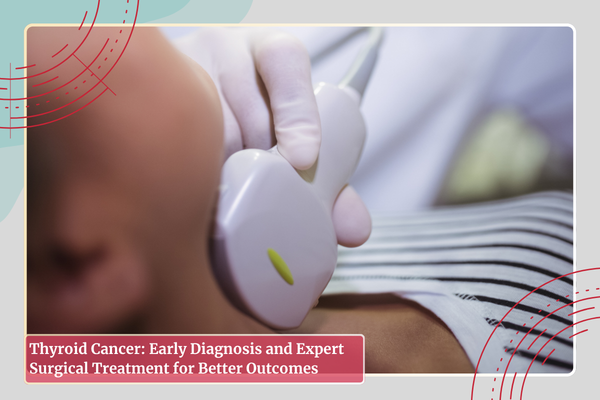
Thyroid Cancer: Early Diagnosis and Expert Surgical Treatment for Better Outcomes
Short Introduction
Thyroid cancer is one of the fastest-growing cancer diagnoses worldwide, yet it is also among the most treatable forms of cancer when detected early. The thyroid gland, located at the front of the neck, plays a vital role in regulating metabolism, energy production, heart function, and overall hormonal balance.
Many thyroid cancers develop slowly and may remain unnoticed for years. However, a persistent thyroid nodule, neck swelling, or voice changes should never be ignored. Early diagnosis and timely treatment can significantly improve cure rates and long-term survival.
Under the expert care of Dr. Syed Hassanujjaman, patients receive advanced evaluation, precise surgical treatment, and comprehensive oncological care for thyroid cancer and related endocrine tumors.
What is Thyroid Cancer?
Thyroid cancer occurs when abnormal cells within the thyroid gland grow uncontrollably and form a tumor. While many thyroid nodules are benign (non-cancerous), a small percentage may develop into cancer.
The thyroid gland consists of two lobes located on either side of the windpipe and produces hormones that regulate numerous body functions.
Common Types of Thyroid Cancer
Papillary Thyroid Cancer
The most common form of thyroid cancer, accounting for approximately 80% of cases. It generally grows slowly and has an excellent prognosis.
Follicular Thyroid Cancer
Usually affects middle-aged adults and may spread through the bloodstream.
Medullary Thyroid Cancer
A less common form that may be associated with inherited genetic syndromes.
Anaplastic Thyroid Cancer
A rare but aggressive type that requires immediate medical attention.
Risk Factors
- Family history of thyroid cancer
- Previous radiation exposure to the neck
- Certain genetic conditions
- Female gender
- Thyroid nodules
- Iodine deficiency in some regions
- Increasing age
When Should You Seek Treatment?
Thyroid cancer often develops silently and may not cause symptoms in its early stages.
Common Warning Signs
- A lump or swelling in the neck
- Enlarged thyroid gland
- Persistent hoarseness of voice
- Difficulty swallowing
- Persistent throat discomfort
- Neck pain
- Enlarged lymph nodes in the neck
- Difficulty breathing in advanced cases
Seek Immediate Medical Evaluation If:
- A thyroid lump increases in size
- Voice changes persist for more than two weeks
- Swallowing becomes difficult
- Neck swelling is associated with enlarged lymph nodes
- You have a family history of thyroid cancer
Early diagnosis offers the best opportunity for successful treatment.
Why is Treatment Recommended?
The primary goal of treatment is to completely remove the cancer, prevent recurrence, and preserve long-term health.
Benefits of Early Treatment
Excellent Cure Rates
Most thyroid cancers diagnosed early have very high survival and cure rates.
Prevention of Cancer Spread
Timely treatment reduces the risk of spread to lymph nodes and distant organs.
Improved Long-Term Survival
Early-stage thyroid cancer is associated with excellent long-term outcomes.
Better Quality of Life
Prompt treatment helps maintain normal daily activities and overall well-being.
Advanced Surgical Techniques
Modern thyroid surgery allows precise cancer removal while preserving critical structures whenever possible.
Treatment Options
Treatment depends on the type, size, and stage of the cancer.
Thyroid Surgery
Surgery remains the primary treatment for most thyroid cancers.
Procedures may include:
- Thyroid Lobectomy
- Total Thyroidectomy
- Central Neck Dissection
- Lateral Neck Dissection (when lymph nodes are involved)
Radioactive Iodine Therapy
May be recommended after surgery for selected patients.
Thyroid Hormone Therapy
Used after thyroid removal to maintain normal hormone levels and reduce recurrence risk.
Targeted Therapy
Used in advanced or recurrent thyroid cancers.
Multidisciplinary Cancer Care
Comprehensive management involving surgical oncology, endocrinology, nuclear medicine, and medical oncology specialists.
Risks and Complications
If left untreated, thyroid cancer can continue to grow and spread.
Potential Complications
- Spread to lymph nodes
- Lung metastasis
- Bone metastasis
- Airway compression
- Difficulty swallowing
- Voice changes
- Local tissue invasion
Risks Associated with Treatment
Although thyroid surgery is generally safe, possible risks include:
- Temporary hoarseness
- Injury to vocal cord nerves
- Low calcium levels
- Bleeding
- Infection
- Need for lifelong thyroid hormone replacement after total thyroidectomy
Careful surgical planning and expert postoperative care help minimize these risks.
Frequently Asked Questions (FAQ)
Is thyroid cancer curable?
Yes. Most thyroid cancers have excellent cure rates, especially when diagnosed and treated early.
Are all thyroid nodules cancerous?
No. Most thyroid nodules are benign, but evaluation is important to identify those that may be cancerous.
How is thyroid cancer diagnosed?
Diagnosis may involve:
- Clinical examination
- Thyroid ultrasound
- Fine Needle Aspiration Cytology (FNAC)
- Blood tests
- CT Scan or MRI when necessary
Is surgery always required?
Most thyroid cancers require surgery, although the extent of surgery depends on the type and stage of the disease.
What is the recovery time after thyroid surgery?
Most patients recover within a few weeks and can gradually return to normal activities.
Will I need medication after surgery?
Patients who undergo total thyroidectomy generally require lifelong thyroid hormone replacement therapy.
Can thyroid cancer return after treatment?
Although many patients are cured, regular follow-up is important to detect recurrence early if it occurs.
About Dr. Syed Hassanujjaman
Dr. Syed Hassanujjaman
MBBS, MS (General Surgery)
DNB (General Surgery)
DNB (Surgical Oncology)
Surgical Oncologist
Dr. Syed Hassanujjaman specializes in the surgical management of thyroid cancer, head and neck cancers, gastrointestinal cancers, breast cancer, and complex oncological conditions. With expertise in advanced cancer surgery and multidisciplinary cancer care, he is committed to providing personalized treatment strategies that maximize cure rates while preserving quality of life.
Call to Action (CTA)
A thyroid lump or persistent neck swelling should never be ignored. Early diagnosis and expert surgical treatment can dramatically improve outcomes and offer the best chance for complete recovery.
Schedule a consultation with Dr. Syed Hassanujjaman today for comprehensive thyroid cancer evaluation, expert surgical oncology care, and a personalized treatment plan designed to help you achieve the best possible outcome.